Health and safety, horticultural best practices and the wider agricultural work flow are changing. There are a number of reasons for this, but for those working in the industry, it highlights the importance of training and professional development.
Luckily, the training landscape has also changed. Traditional face-to-face courses aren’t your only option. While classrooms and practical sessions are still very much part of the scene, online learning keeps you up-to-date in a convenient and accessible way.
Both online and face-to-face courses have their place and both offer benefits that make it the right choice. It is common for people to use a combination of both to gain theoretical knowledge at their convenience and practical experience with certified trainers.
But the right learning style for you will depend on your situation and the subject.
What are Traditional Agricultural Courses?
Traditional courses are ones that are delivered in person at a specified location. This could be on your site, where the trainee joins you for the course duration time, or it could be at their own site (for example, Newlands have several locations across Dorchester and Blandford Forum).
Usually, these courses combine theory lessons taught in a class room, with practical lessons out on the site.
Of course, these mean your staff are away from your workplace with the training provider for the length of the course.
Typical examples of face-to-face courses will include:
Benefits of Traditional Courses
For practical, hands-on skills, traditional agricultural courses offer a valuable learning experience. By combining classroom-based theory with supervised practical sessions, learners can build confidence and develop the skills needed to carry out tasks safely and effectively.
- Hands-on practical experience – Develop real-world skills using machinery, equipment and tools in a safe, supervised environment.
- Immediate feedback from instructors – Ask questions, receive demonstrations and correct techniques as you learn.
- Practical assessments – Demonstrate competency through observed tasks, helping to meet industry standards and certification requirements.
- Greater confidence before returning to work – Practising skills in realistic settings helps learners feel more prepared for day-to-day tasks.
- Opportunities to learn from others – Training alongside peers allows learners to share experiences, discuss challenges and pick up valuable industry insights.
What is Agricultural E-Learning?
Agricultural e-learning allows learners to complete training online, without needing to travel to a training centre or arrange time away from work. Instead, courses can be accessed from a computer, tablet or smartphone at a time that suits the learner.
Unlike traditional agricultural training, online courses are typically focused on theoretical knowledge, health and safety, compliance and professional development, rather than practical skills. This makes them an ideal option for businesses looking to keep staff up to date with workplace training while minimising disruption to day-to-day operations.
Typical examples of e-learning courses include:
- Health & Safety
- Fire Safety
- Manual Handling
- Mental Health Awareness
- Environmental Awareness
- Equality, Diversity & Inclusion
- GDPR
Benefits of E-Learning
Online training offers a flexible way to develop knowledge and stay compliant without the need for classroom-based learning.
- Learn anywhere – Complete training from home, the workplace or any location with an internet connection.
- Flexible learning – Work through courses at your own pace and fit training around existing commitments.
- Reduce time away from work – Staff can complete training when it suits the business, reducing disruption.
- Consistent learning – Every learner receives the same high-quality training experience.
- Easy to refresh knowledge – Ideal for annual refresher training and ongoing professional development.
- Ensure all relevant people complete the training – Easy tracking means as an employer you can be confident everyone who needs to is working their way through the course and completing it in a timely manner.
- Audit ready – Instant reports mean you are always ready for an audit with the evidence you need.
Traditional Agricultural Courses vs E-Learning
Choosing between traditional training and e-learning isn’t about deciding which is better. It’s about understanding which format is most appropriate for the skills being taught.
| Traditional Courses | E-Learning |
|---|---|
| Classroom and practical learning | Fully online learning |
| Fixed dates and locations | Complete training anytime |
| Ideal for practical skills | Ideal for theory and compliance |
| Instructor-led demonstrations | Self-paced learning |
| Hands-on assessments | Online knowledge assessments |
| Travel required | No travel required |
Many employers now choose to use both methods together, ensuring staff receive practical training where it’s needed while using e-learning for essential workplace knowledge.
Within the agricultural sector. This typically looks like:
- Traditional courses for learning to use equipment and machinery
- Traditional courses when it is the first time learning about the topic
- Online courses for theory heavy content
- Online courses to refresh knowledge
When Traditional Training is Essential
Some skills can only be developed through practical experience. Courses involving machinery, equipment or specialist tasks require learners to demonstrate their ability in a safe, controlled environment. This is why face-to-face courses are essential for some types of learning.
Traditional training is often essential for courses such as:
- Tractor and machinery operation
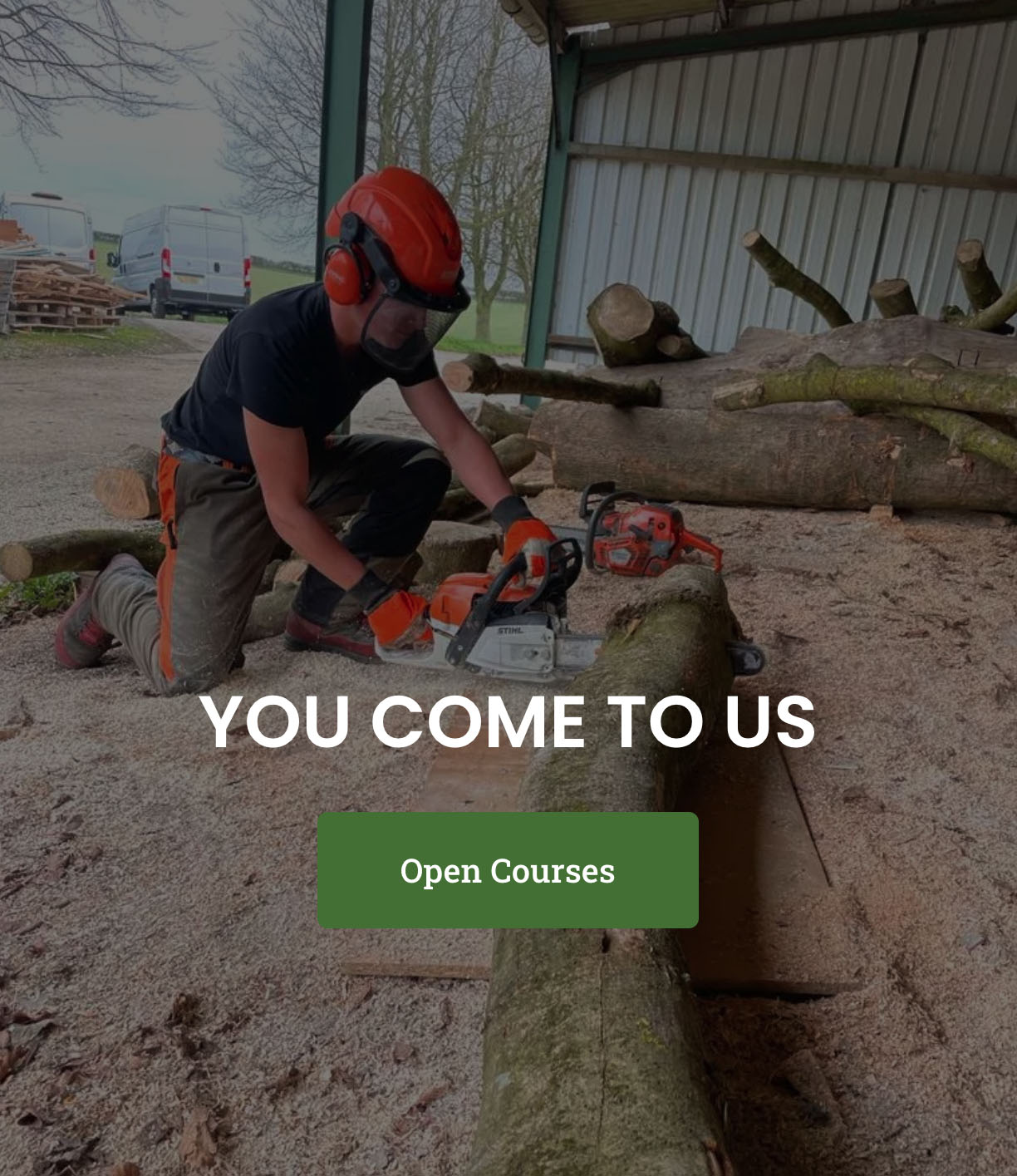
- Chainsaw training
- Pesticide application
- Plant machinery
- Livestock handling
- First Aid practical assessments
These types of courses allow instructors to observe learners, provide immediate feedback and ensure they can safely apply what they’ve learned before returning to the workplace.
Because of this, employers and employees can leave the course confident in their ability, health and safety and knowledge.
When E-Learning Is the Better Option
Not every course requires practical assessments or face-to-face instruction. For topics focused on legislation, workplace procedures or general awareness, online learning can be a more efficient solution.
E-learning is particularly useful for:
-
- Staff inductions
- Annual refresher training
- Health & Safety awareness
- Fire Safety
- Manual Handling
- Environmental awareness
- Workplace wellbeing
- Data protection training
- Theoretical content such as Control of Substances Hazardous to Health
Because courses are completed online, businesses can train multiple employees without the additional costs associated with travel or extended time away from work.
Why More Businesses are Choosing Blended Learning
Rather than choosing one method over the other, many businesses are adopting a blended approach to training.
Practical courses continue to provide the hands-on experience needed for operating equipment and developing technical skills, while e-learning delivers the standardised theoretical knowledge that supports safe working practices and legal compliance.
By combining both approaches, employers can:
- Reduce time spent away from the workplace
- Deliver consistent compliance training across the workforce
- Keep mandatory training up to date
- Allow practical sessions to focus on developing hands-on skills
- Create a more flexible learning experience for employees
For many land-based businesses, this combination provides the best balance between practical learning and ongoing professional development.
Which Training Method is Right for You?
The right training method will depend on the subject being taught and the outcomes you’re looking to achieve.
Traditional agricultural training is often the best choice when learners need to develop practical skills, operate machinery or complete formal competency assessments.
E-learning is better suited to courses that focus on workplace knowledge, compliance or professional development, giving learners the flexibility to complete training at a time and place that suits them.
In many cases, the most effective solution is to use both methods together, ensuring employees receive the practical experience they need alongside the knowledge required to work safely and confidently.
Training with Newlands Training
E-learning isn’t a replacement for hands-on training. They both bring their own benefits, with face-to-face training ensuring machinery and equipment is used correctly and providing confidence in that, while e-learning offers convenience and time and cost savings.
Blending the two together means businesses can be sure their employees have the knowledge and skills needed to work safely, efficiently and confidently.
At Newlands Training, we have teamed up with iHasco to offer a range of online courses alongside our Open and In-house traditional courses.
With the online courses available in over 40 languages, and available 24 hours a day, including our e-learning courses into your training programme makes developing and learning even more accessible.
You can be confident that your staff are up-to-date with industry regulations or best practices as the courses are regularly updated to reflect sector changes.
Plus, we can help you stay compliant as you will be able to track staff progress and completion. With completion reports available instantly for any audit.
Discover our e-learning courses and register for any relevant to you today.
Got a few questions? Don’t hesitate to reach out to our team by calling us on 07734 079495 or emailing enquiries@newlandstraining.co.uk.